







Posted 2 months ago
 Patriotica
(55 items)
July 4th, 1776 is celebrated as the independence day of the new country of the United States of America, at least on paper. Sure, they had thirteen states, a representative continental congress, a capital city in Philadelphia, a militia and navy of sorts along with 3 million or so in population. What they didn’t have, though, was an official national flag (an unofficial flag called the Grand Union flag that featured the flag of England as the canton with thirteen red and white stripes was never codified).
A year or so later, in response to a petition made by an American Indian nation (the record doesn’t specify which nation) on June 3 for “an American Flag”, the Marine Committee of the Second Continental Congress quickly passed The Flag Act of June 14, 1777, stating “Resolved, That the flag of the thirteen United States be thirteen stripes, alternate red and white; that the union be thirteen stars, white in a blue field, representing a new constellation.”
That’s it, only 31 words, adopted between other routine matters. Nowhere does it say how the stars were to be arranged, provide any meaning to the colors, whether the stars were to be five or six pointed ones or even if the stripes were to be arranged horizontally or vertically.
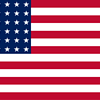
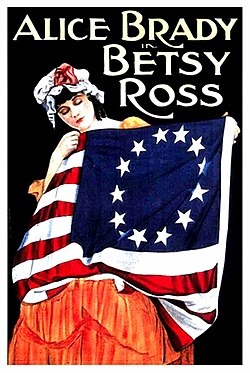
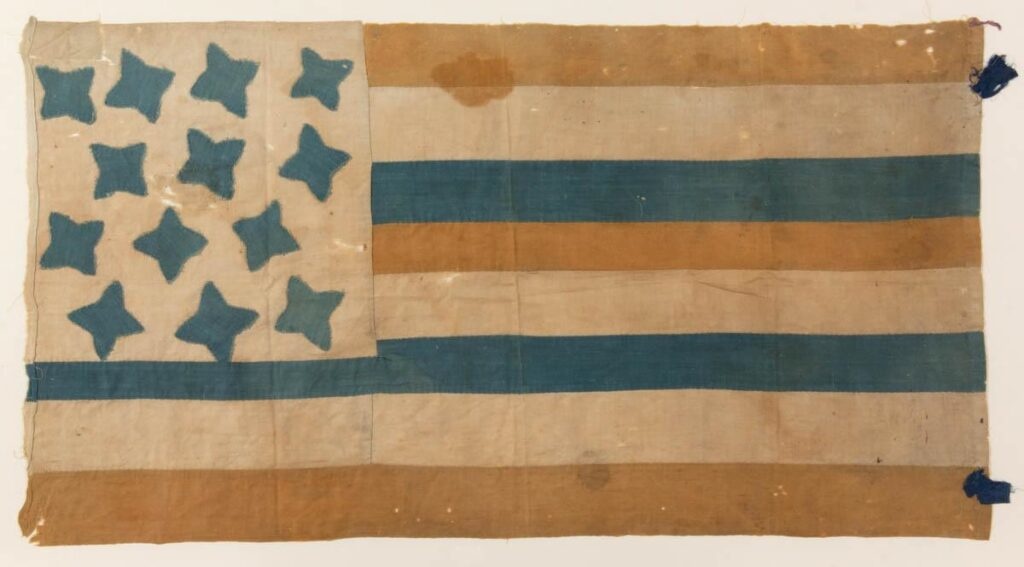
Because the initial Flag Act of 1777 was unclear, so many different ‘national’ standard designs evolved, including a white, 13 five pointed stars in a circle on a blue field version associated with Betsy Ross (image 1), that President William Howard Taft felt the need in 1912 to finally officially regulate the star pattern of the official national flag by Executive Order, beginning with the 48 star flag arranged in a box pattern.
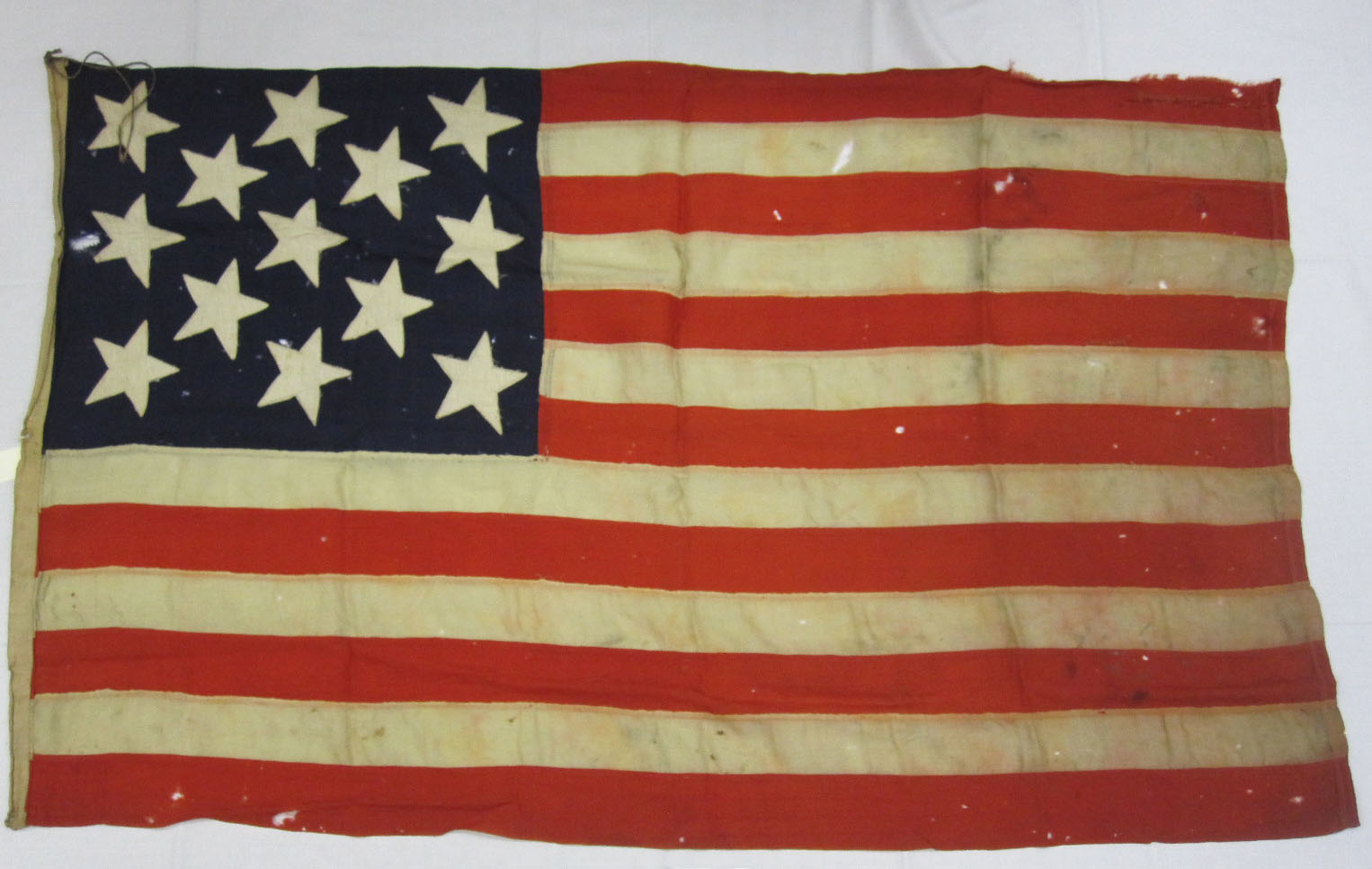
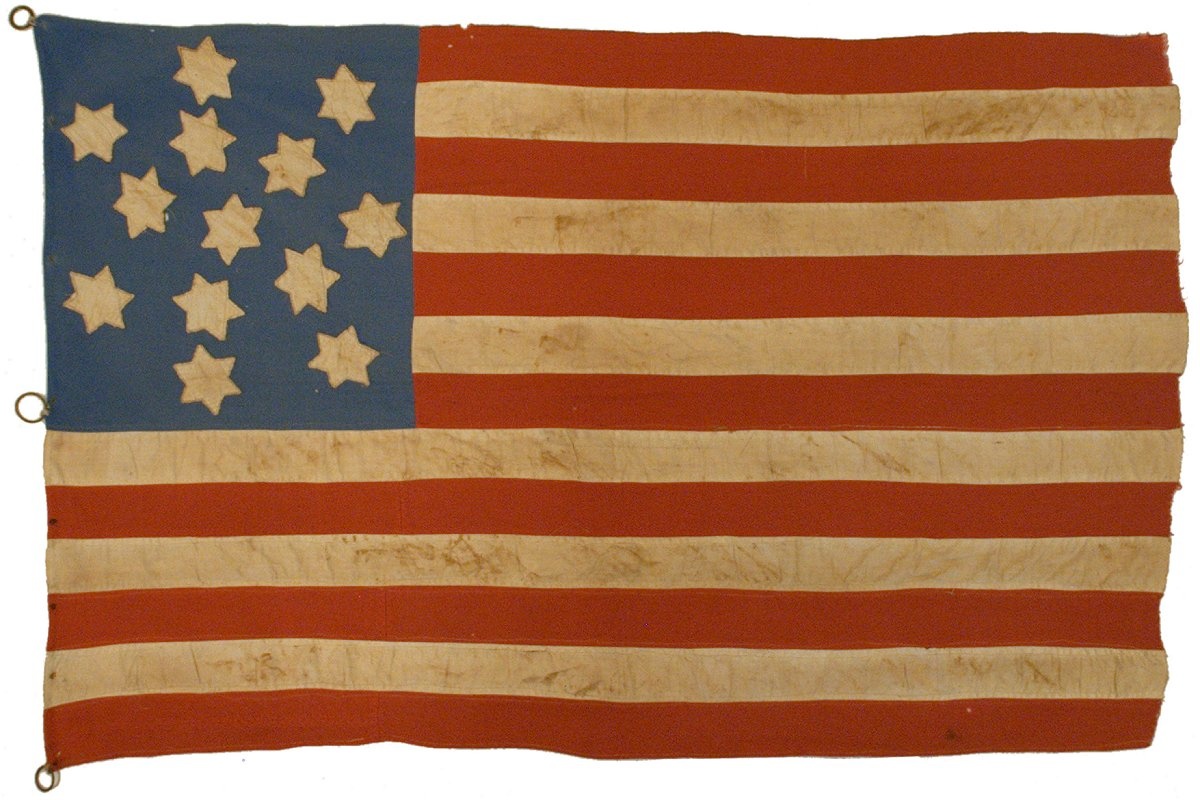
So, the 13-star flag cannot be positively identified as an 18th century one just because it has 13 stars. There were many different star patterns besides the ones arranged in a circle, some 66 different patterns in total (images 3,4). Most were made for the Centennial celebrations in 1876 and it was also used officially by the U.S. Navy as its small boat flag (image 2) from 1850 to 1916. So there are quite a number of 13-star flags available, but none that were known to have been made in the 18th century (apart from some handmade militia flags).
OK then, how do you know if your 13-star flag belongs to the time of Betsy Ross or, more likely, much later?
First, there is no evidence of any sort that Elizabeth ‘Betsy’ Ross even knew or even met George Washington or any of the Founding Fathers to lend credence that she designed or sewed the first national flag. She was just one among many seamstresses and upholsterers in Philadelphia during the Revolutionary War period that routinely made flags for the government and military units as additional work.
Instead, the distinction as ‘designer’ goes to Frances Hopkinson, a member of the Continental Congress at the time. The story of Betsy Ross was circulated by Ross’ grandson in time for the Centennial in 1876 as family lore, but there hasn’t been any evidence so far to support it. Yet, the 13 five-pointed stars in a circle continues to be called the Betsy Ross flag anyway.
Second, your flag should be made of “worsted” wool, linen, heavy cotton or silk. All of the stitching must have been in a specific hand-sewn style with a specific weave. All 18th century flags were hand made usually at home, none were manufactured commercially.
The star pattern in the blue canton would also be an important factor and how they were sewn and the material they used. The thread used was not cotton but linen or silk of a certain width and manufacture. No metal grommets were ever used.
Because of these special requirements and the fact that the U.S. Navy continued to use the 13-star pattern as its small boat ensigns, there is no shortage of 19th century 13-star flags in existence. .
So, do authentic 13-star, 18th-century U.S. national flags exist anywhere? Unfortunately, none have been found that made it out of the 18th century because they were made mostly at home and were not intended to last a long time. Regular citizens wouldn’t have displayed the national flag in the way we do today unless they cared to.
That’s not to say someone doesn’t have an authentic 18th-century 13-star national flag somewhere. It just hasn’t come to light yet.
So, we have to ask, what’s in your attic?
This article is adapted from the original published at WorthPoint.com



