






Posted 30 days ago
 glasfreund
(50 items)
Loetz presents us with the greatest mystery surrounding the signature: the fact that numerous “Phänomen” glasses of the same shape and decor were sometimes signed and sometimes left unsigned. There must have been specific reasons for signing or omitting the signature that lay outside the scope of the glass itself—its shape, decor, and price.
The authors of the first Lötz monograph, published in 1989, had already addressed this question. They argued that customs regulations applied. Loetz had signed all glasses intended for export to a specific country that exceeded a certain minimum value. Glasses intended for the domestic market or for countries without comparable import requirements remained unsigned, as did glasses below the minimum value. This seems logical, and there is no fundamental reason to dispute it. The Loetz-Austria signature undoubtedly met the requirements for a customs declaration of origin. However, if the minimum price had been the sole determining factor for the engraving, the signature would likely not appear nearly exclusively on “Phänomen” glasses, since glasses with other decors—such as large pieces—also fell within the price range of signed “Phänomen” products.
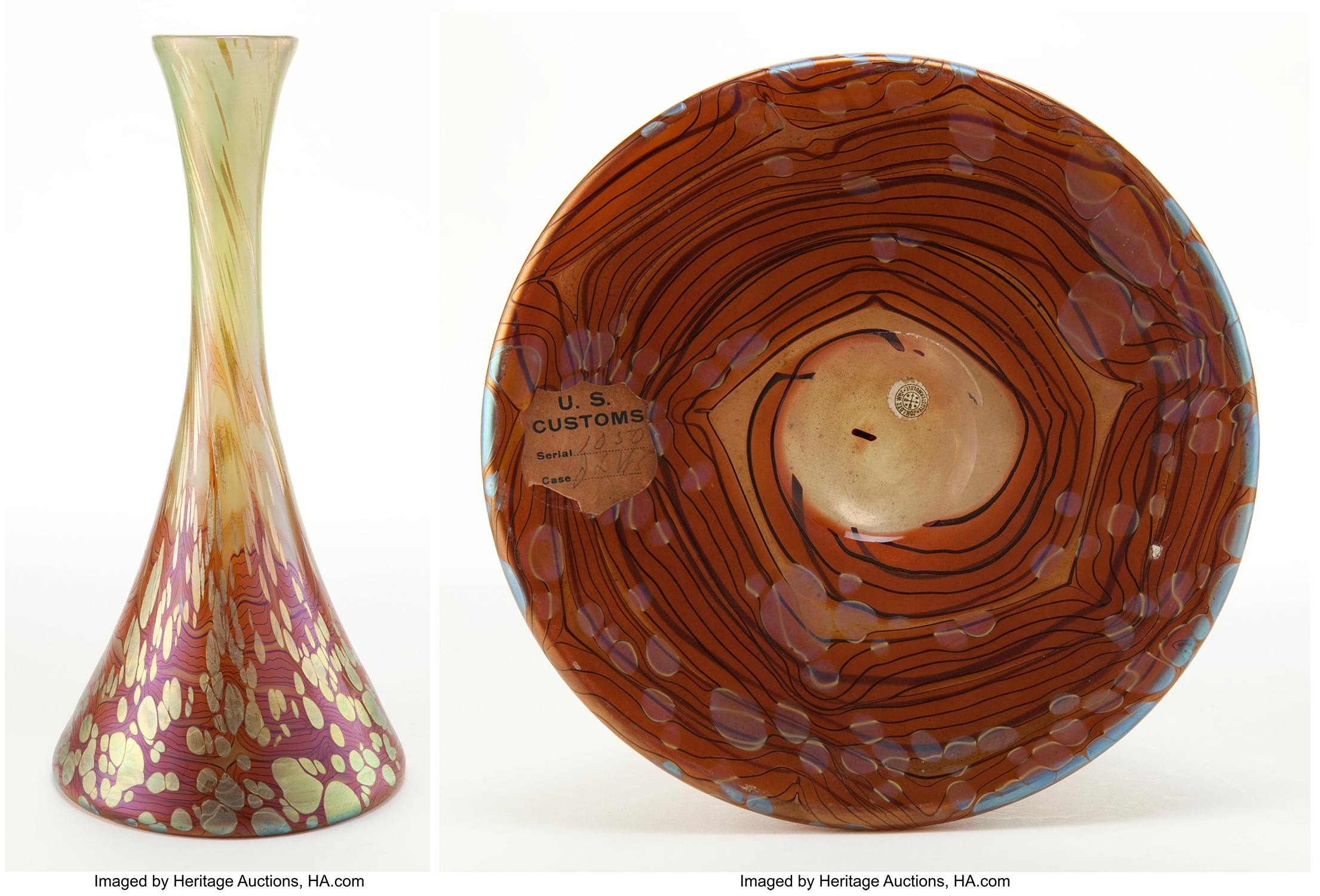
Clues can be found on individual glass pieces in the United States. On the underside of a large “Cytisus” vase are the original paper label bearing the Spaun company mark and an original US Customs paper label with a processing note . This vase bears no engraved signature. Furthermore, some “Phänomen” vases are known to have contemporary American dealer labels from Chicago and St. Louis, which are likewise not permanently signed. This argues against the requirement of permanent marking for customs purposes. Nor does the sole customs requirement for a permanent mark explain its “phase-out.” Did these regulations cease to apply in 1903, or by 1904 at the latest, and did so simultaneously for all countries? That seems, at the very least, highly unlikely. Ultimately, even after more than a century and despite global trade, glassware signed “Loetz Austria” should be disproportionately common abroad and appear less frequently in Central Europe. This is not what we observe.
As previously noted, von Spaun used the crossed arrows with four stars in a circle as a registered trademark, primarily as a paper label, and in special cases as an engraving. The “Loetz Austria” signature, on the other hand, was not registered, neither as a figurative nor as a word mark. Nevertheless, von Spaun felt compelled to introduce the “Loetz Austria” signature in 1900 and to use it alongside the registered company trademark in the form of a paper label. Two different brands on the same glass. What made him do that? Previously, only glassware intended for museums and exhibitions had been permanently marked. Von Spaun continued this practice even with the Loetz-Austria mark. However, the majority of the marked glassware left the factory bound for customers. The mark represented the company throughout the world. Max Ritter von Spaun likely used it primarily to promote his finest glassware. Consequently, the Loetz-Austria engraving served not only its own marketing purposes but also brand protection. Loetz produced to order, so in most cases knew the distribution channel and could have signed precisely those glasses that, with foresight, would enter into direct competition with its rivals.
Beyond that, the reasons for or against the Loetz-Austria signature remain unclear. Were the sample collections that Loetz regularly provided to its representatives signed? Were there instances of courtesy signatures? Were domestic shipments or those to certain customers generally left unsigned? What agreements were in place with the numerous metal companies that purchased glass for their mountings, and what agreements were made with the firms that finished Loetz glass with silver overlays? Did Loetz abandon the engraved signature for cost reasons? Or is the decision to forgo engraving more closely linked to the end of the era of Phenomenon glass? We do not know.
Will be continued.
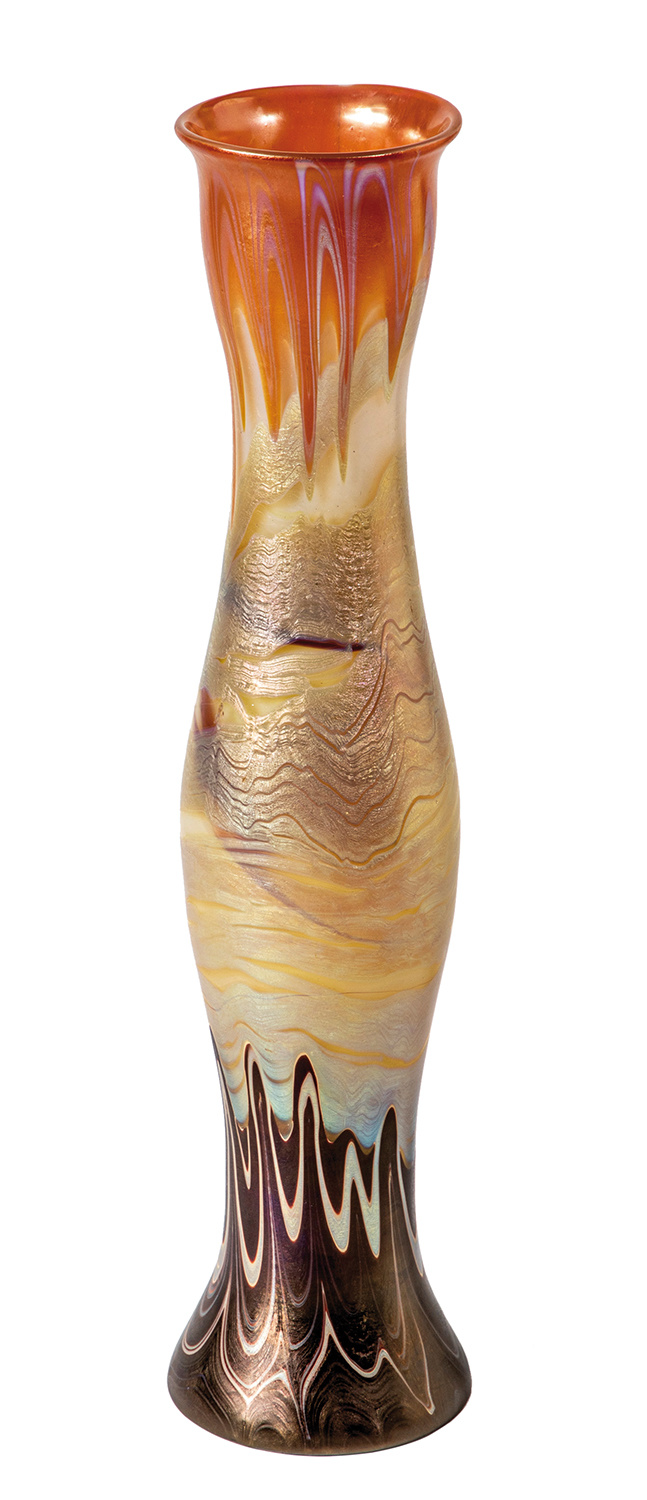
Fig. 20 Large 1900 World’s Fair vase “opal Phänomen Gre 358”, PN II-358, 1900. This model exists both with and without the Loetz-Austria signature. Photo: courtesy of Dr. Fischer Auction House
Fig. 21 Large “Cytisus” vase, PN unknown, c1902. Loetz paper label, but no permanent signature, US customs paper label. 36 cm tall. Photo: courtesy of Heritage Auctions
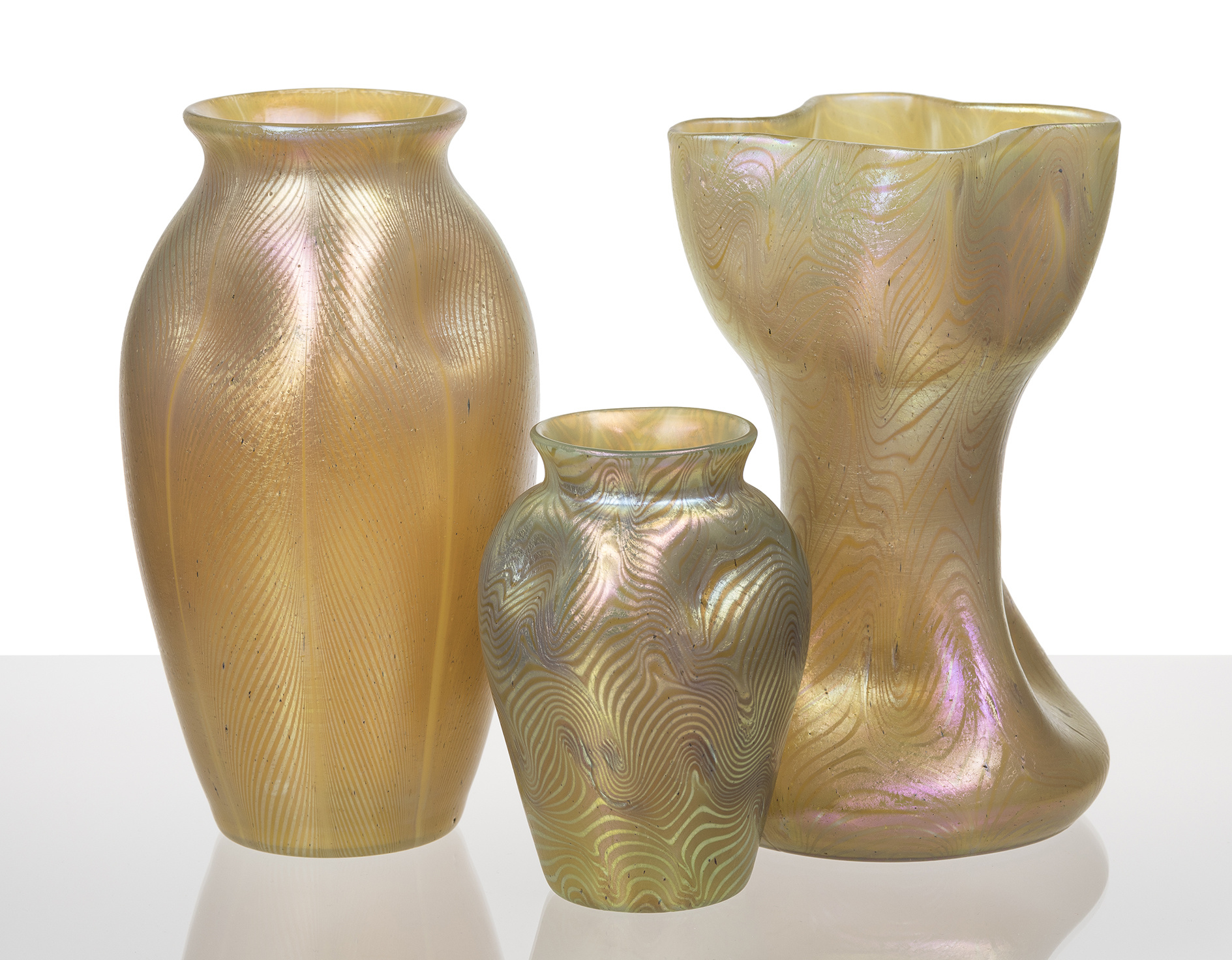
Fig. 22 Three vases featuring the “Phänomen Gre 2/466 Hermedes I,” (left) and “Gre 2/467 Hermedes II,” center and right). These two Phenomenon genres may generally be unsigned.
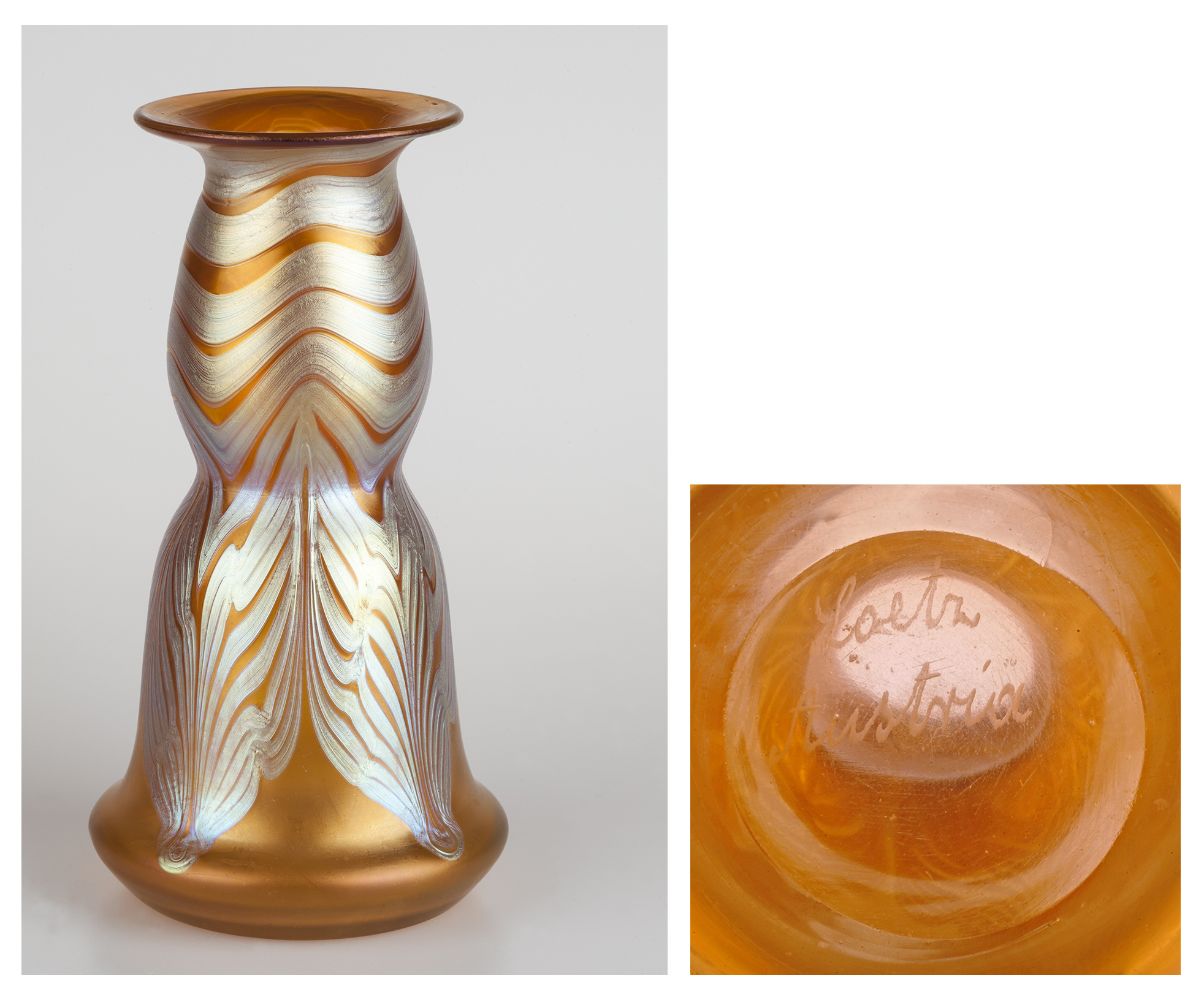
Fig. 23 Vase “orange Phänomen Gre 181,” 1900, signed “Loetz Austria.” Most of the glasses with this genre are signed.
Text and images by Volkmar Schorcht unless otherwise noted.
Link to part 1
https://www.collectorsweekly.com/stories/329197-loetz-austria-the-mystery-of-the-signat?in=666-activity
Link to Part 2
https://www.collectorsweekly.com/stories/329219-loetz-austria-the-mystery-of-the-signa?in=441-activity
Link to Part 3
https://www.collectorsweekly.com/stories/329234-loetz-austria-the-mystery-of-the-signat?in=666-activity
Link to Part 4
https://www.collectorsweekly.com/stories/329252-loetz-austria-the-mystery-of-the-signat?in=666-activity
Link to Part 5
https://www.collectorsweekly.com/stories/329270-loetz-austria-the-mystery-of-the-signat?in=666-activity



Really enjoying the Loetz signature series Volkmar! I think the export requirements we've known for a while, like you say since the incredible 1989 Loetz books, and given these were export requirements, the same logic should (in theory) apply to any glassworks. Harrach, Riedel, Poschinger, Kralik, etc. Paper labels were also used to satisfy country of origin customs requirements, which throws a wrench into the equation.
Thank you, Brian. The hypothesis that the “Loetz-Austria” signature was used for customs reasons has taken on a life of its own over the years. It has gone so far that auction houses refer to it as a brand for the American market. I hope to encourage people to question this hypothesis.